Practice note
Spice Tempering Basics: Blooming Spices in Ghee
Tempering, called tempering, chaunk or baghar in different regions, is the technique of frying whole spices briefly in hot fat to release their aroma. It is the step that gives dal, lentil and rice porridge and many vegetables their finished, fragrant taste.
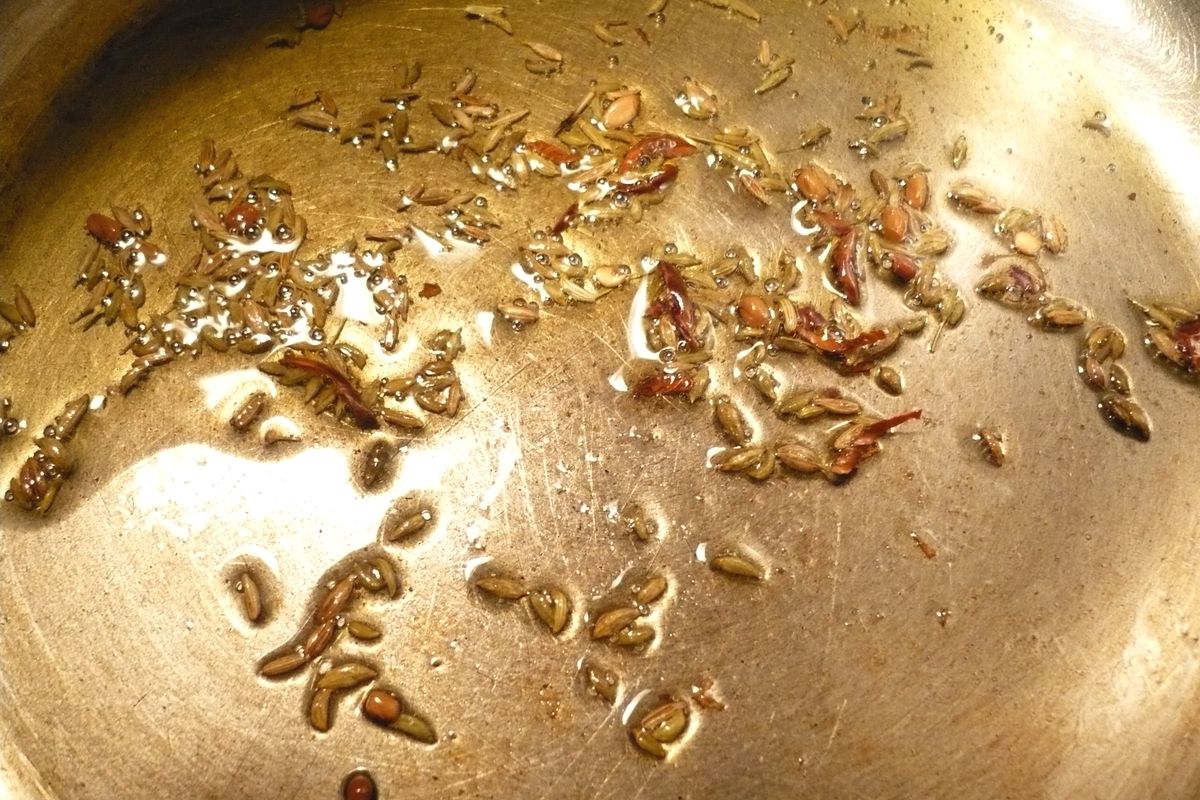
Photo: Chaunkphoto by w:en:User:Badagnani, CC BY-SA 3.0, via Wikimedia Commons. Cropped and resized.
Why tempering works
Many of the aromatic compounds in spices dissolve much better in fat than in water. Heating whole seeds in ghee or oil for a few seconds draws those flavors out and spreads them through the fat, which then carries them into the dish. That is why a spoonful of sizzling tempering poured over a pot of plain dal can transform it completely.
Two ways to temper
Some recipes begin with tempering: spices are fried first, then vegetables, grains or dal are added to the pan, as in our Simple, wholesome Flattened rice and Savory Vegetable Quinoa Skillet. Others finish with it: the dish is cooked, and a fresh tempering is poured over just before serving, as in Mung Dal Lentil and rice porridge and Bottle Gourd and Split Chickpea Stew. Finishing tempering gives the brightest, most aromatic result.
The usual order
- Heat the ghee or oil over medium heat until it shimmers. Test with a single mustard seed; it should sizzle at once.
- Add mustard seeds first and wait for them to pop and crackle, about 20 to 30 seconds.
- Add cumin seeds next; they darken and smell toasty within 20 seconds.
- Add small dals such as urad or split chickpeas, if using, and stir until golden.
- Add dried red chiles and curry leaves; step back, as fresh curry leaves sputter.
- Add ground spices and asafoetida last, for just a few seconds, because powders burn quickly.
- Pour immediately over the dish, or add your next ingredients to stop the cooking.
Signs it is going right, and wrong
- Seeds should sizzle and dance, not sit still (too cool) or blacken instantly (too hot)
- Cumin should turn a shade darker, not black
- Curry leaves should turn crisp and bright, not brown
- If anything smells acrid or burnt, start again; burnt spices taste bitter and will flavor the whole dish
Choosing your fat
Ghee is the traditional choice in North Indian cooking and has a rich, nutty flavor. Coconut oil is common in Kerala and pairs beautifully with mustard seeds and curry leaves. Sesame oil is used in Tamil Nadu and Andhra cooking. A neutral oil works when you want the spices alone to shine.
Keep a small pan just for tempering
A small, heavy pan or a traditional tempering ladle makes finishing tempering easy and quick. Have every spice measured and within reach before you start, because the whole process takes less than a minute, and there is no time to search the cupboard once the ghee is hot.
This note shares general cooking and lifestyle ideas only. It is not medical, nutritional or yoga-therapy advice. Please consult a qualified professional about your own health, diet or practice.